
No products in the cart.
Planetary Gearbox

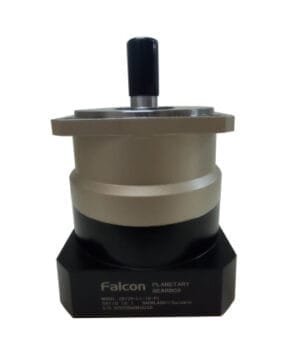
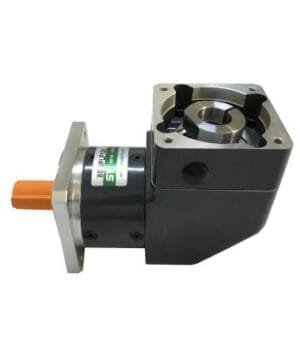
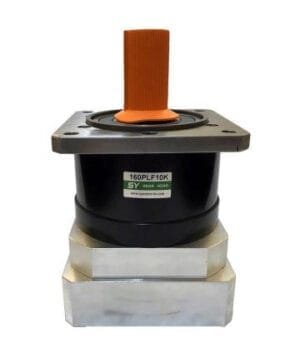


Planetary Reducers: High Torque, Precision, and Efficiency
Planetary reducers, also known as planetary gearboxes, are compact and high-performance gear systems designed for applications requiring high torque transmission and precise motion control. Thanks to their unique gear structure, they deliver superior efficiency, low backlash, and long service life.
Frequently Asked Questions
A planetary gearbox is a gear system that transmits power from the input shaft to the output shaft at reduced speed but with increased torque. Its compact design makes it suitable for applications requiring high power transmission.
Planetary gearboxes operate through the interaction of a sun gear, planetary gears, and an inner ring gear. The sun gear receives the input power, the planetary gears transfer this power to the carrier, and torque is increased while speed is reduced.
Helical gear reducers are generally used in single-axis systems, while in planetary gear reducers, power is distributed among multiple gears. This gives planetary gear reducers a higher torque capacity.
Planetary gearboxes are widely used in CNC machines, robotic systems, packaging machines, cranes, wind turbines, and automation lines.
Planetary gearboxes are compatible with servo motors, stepper motors, AC motors, and DC motors.
Planetary gearboxes are capable of generating high torque despite their compact size. They also offer quiet operation, low maintenance requirements, and a long service life.
When making a selection, the torque, speed ratio, mounting type, and motor compatibility required by the system should be considered.
Torque is calculated based on the input power and the reduction ratio. The formula is expressed as T = (P x 9550) / n (Nm).
Planetary gearboxes typically have an efficiency rating between 90% and 97%. This rate depends on gear quality, lubrication, and the number of reduction stages.

